
The Gambia is a country of urgent need…
…and also uncommon opportunity.
Pressures Faced by Rural Gambians
Environmental Degradation
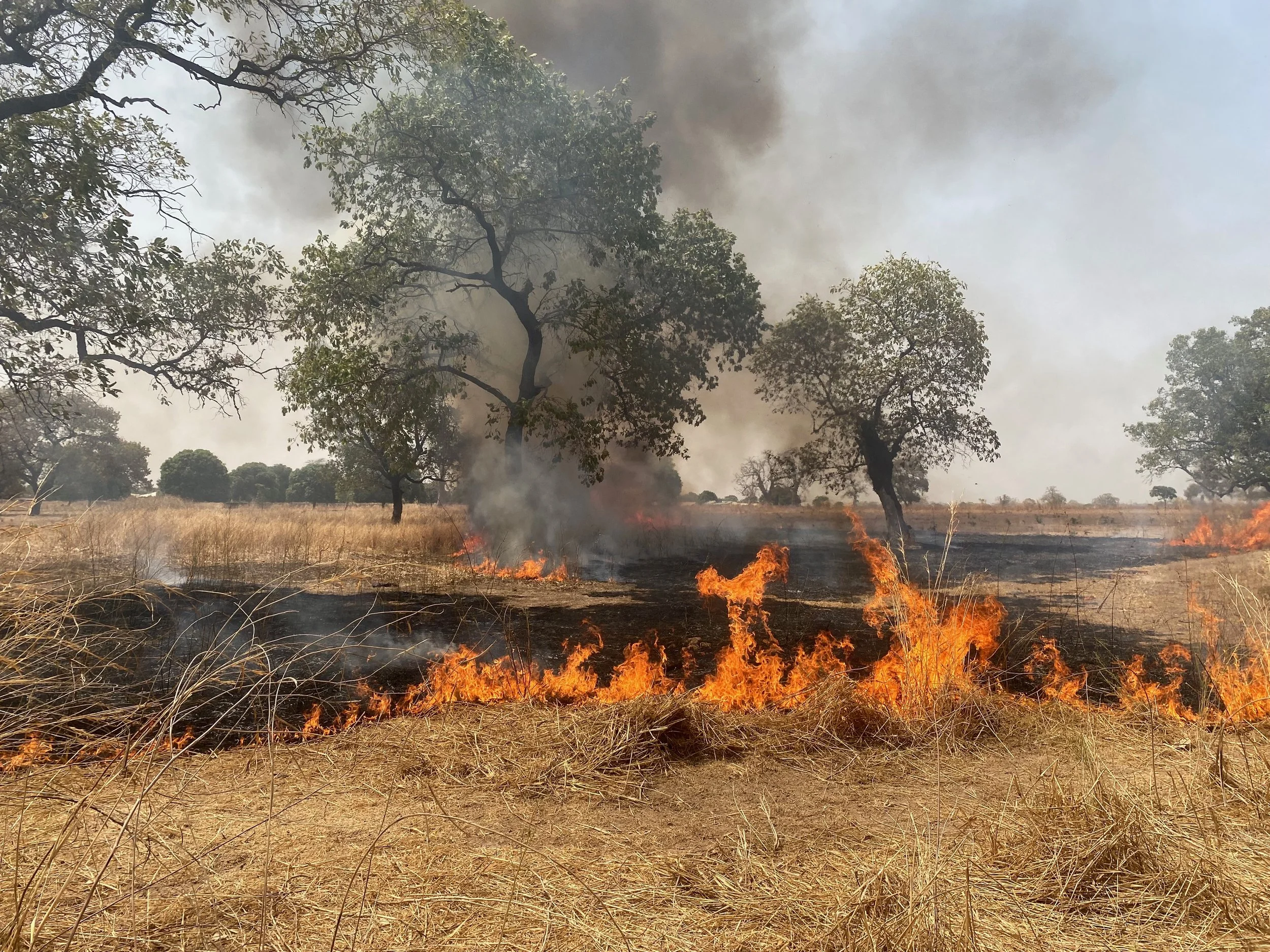
Climate change is accelerating an already fragile balance. The Gambia has experienced the second-worst loss of cropland of any country in West Africa [1], as erratic rainfall and longer dry seasons shrink the land available for farming. Without a shift toward more resilient, climate-adaptive practices, researchers project a significant and widening gap between what the country grows and what it needs to feed itself by 2050 [2].
Poverty & Food Insecurity
The Gambia is one of the smallest and most densely populated countries in mainland Africa, with roughly 2.8 million people occupying just 4,000 square miles. Despite the country's agricultural potential, an estimated 65% of the rural population lives below the poverty line [3]— among the highest rates in West Africa. Formal jobs remain scarce, and GDP per capita sits at just $993 [4], among the lowest in the world. This exacerbates food insecurity, with 24% of rural Gambians experiencing it [5].
Irregular Migration
For thousands of young Gambians, the "Backway" — the informal migration route through the Sahara and across the Mediterranean — has become the default answer to a lack of opportunity at home. In 2025 alone, The Gambia's Ministry of Foreign Affairs reported 893 Gambians dead and more than 1,254 missing while attempting the journey [6]. Field research estimates the odds of dying en route at roughly one in five [7]. For a country of under three million people, that is a staggering, ongoing loss.
Opportunities for Impact
The same smallness that causes The Gambia to be overlooked is also what makes it one of the most efficient places to give. With a population under three million living in a compact, tightly networked country, capital moves fast, and it's easy to see its impact. With an annual per capita GDP of less than $1,000, even a $100 donation goes a long way.
Capable young farmers with the skills, land, and drive to build a livelihood are the rule here, not the exception. What's missing is access to the small amount of start-up capital that would let them start. And in small, high-trust communities, success spreads on its own: when one farmer succeeds, neighbors take notice and start replicating what works, without needing incentives of their own.
We've already seen it work. Fandema has funded 10 farmers so far, with 76% repayment levels and $9.9k in capital deployed across 4 project categories, demonstrating that our model holds up under real Gambian conditions.
In a country this size, your gift doesn't get diluted by scale. It gets multiplied by it.